
Hiring support does not automatically create more capacity. The real gain comes when the right work moves off the owner’s desk with enough context, boundaries and quality checks that it does not bounce straight back.
For a small business, the best first tasks to delegate are usually repeatable, teachable, digitally accessible and easy to verify. That can include inbox triage, calendar coordination, research preparation, CRM updates, document formatting, approved content scheduling, WordPress publishing support and recurring reports. The exact list matters less than whether the task has a clear result.
Use four questions before you delegate anything
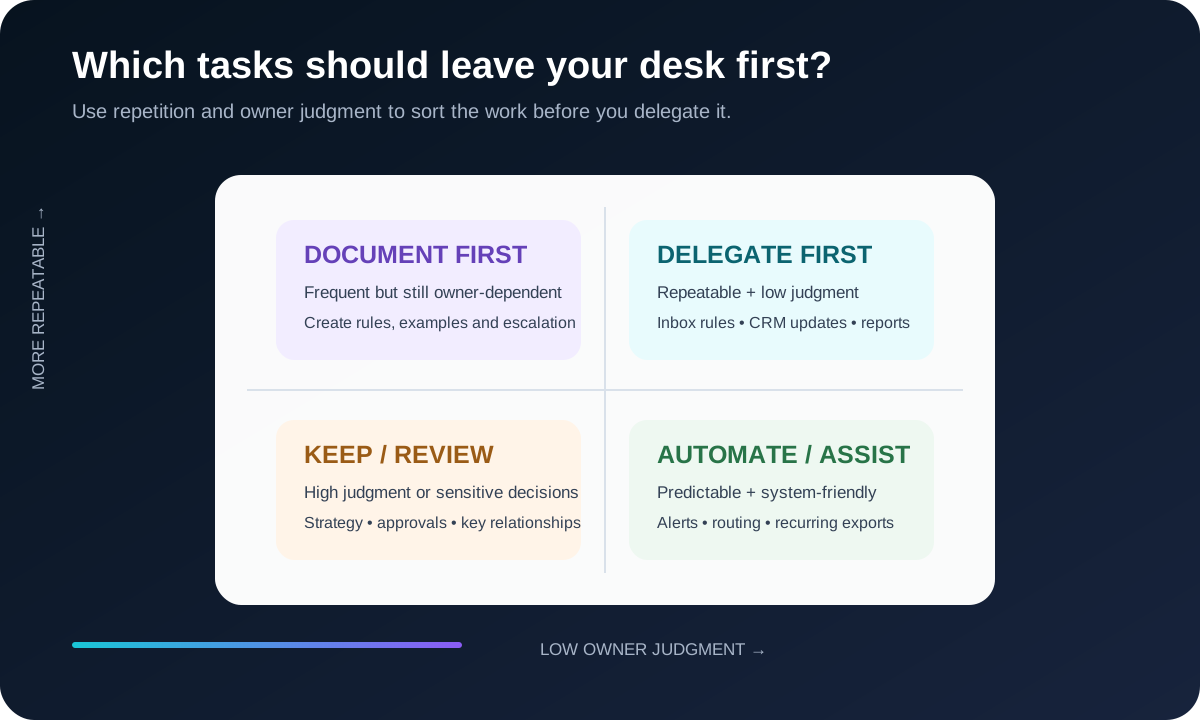
Take one week of recurring work and ask four questions about each item: Does it happen often? Can the result be described clearly? Can someone complete most cases without your personal judgment? Can you check the output without redoing the entire task?
If the answers are mostly yes, the work is a strong delegation candidate. If the task is frequent but still depends on unwritten owner knowledge, document it first. If it is highly predictable, part of it may be suitable for automation. If it involves consequential judgment, final approvals or sensitive relationships, keep the decision with the appropriate person while delegating preparation where sensible.
1. Inbox triage and routine communication
Email is a useful first workflow because the boundaries can be explicit. An assistant can label messages, remove obvious noise, flag priority conversations, track replies that are still owed and prepare drafts for routine questions.
The owner should define what counts as urgent, which senders always need personal attention, which templates may be used and what the assistant must never send without approval. That turns “manage my inbox” into an operational process rather than an open-ended instruction.
2. Calendar and meeting coordination
Scheduling becomes easier to hand off when the rules are visible: preferred meeting windows, buffer time, time-zone handling, meeting length, required attendees and situations that need approval. The assistant can then coordinate within those rules while exceptions come back to the owner.
3. CRM and business-data maintenance
Contact records, lead stages, notes, spreadsheet updates and routine database cleanup are good candidates when there is a defined source of truth. The important part is not data entry speed; it is knowing which fields are required, which source wins when information conflicts and what should be flagged rather than guessed.
4. Research preparation
A virtual assistant can collect competitors, prospects, vendors, tools, article sources or market information when the research question is specific. Define inclusion and exclusion rules, required fields and the expected output format. The owner can then spend time interpreting the findings rather than gathering every input.
5. Document, presentation and formatting work
Recurring proposals, reports, slide cleanup, spreadsheet formatting and document preparation can be delegated effectively when brand rules and examples already exist. A strong handoff includes an approved example, the source files, naming rules and a final QA checklist.
When the work is heavily visual, a specialist may be a better fit than a general administrative assistant. KatVerra’s presentation design support and Canva virtual assistant support are examples of narrower workflows where execution quality depends on the right skill set.
6. WordPress content operations
Publishing an approved article, formatting headings, inserting supplied images, checking links, setting metadata and running a pre-publish checklist can become a repeatable workflow. Site architecture, custom development, security incidents and major design decisions should still go to someone with the appropriate expertise.
If this is a recurring need, the guide to WordPress virtual assistant tasks explains the boundary between routine website operations and specialist work.
7. Marketing execution after strategy is approved
Scheduling approved posts, updating a content calendar, preparing campaign assets, organizing source material and assembling routine performance reports can all be delegated. Strategy is different: deciding the market, offer, positioning, budget or major campaign direction should remain with the people responsible for those decisions.
For a broader view of recurring execution work, see the guide to marketing virtual assistant tasks.
8. Project tracking and recurring reports
An assistant can keep task boards current, chase routine status updates, collect weekly numbers and assemble a consistent report. Define what “on track” means, which blockers need escalation and when a missing update becomes a problem. The report should make decisions easier, not simply create another document to read.
What should you keep for now?
Do not delegate simply because something is time-consuming. Final business strategy, major financial approvals, legal or tax judgments, sensitive employment decisions, crisis communication and relationship-dependent negotiations may require the owner or an appropriately qualified professional.
Preparation can still be delegated. An assistant might organize records, gather options, prepare a draft or schedule the conversation while the authorized person makes the decision.
Build the handoff before expanding the workload
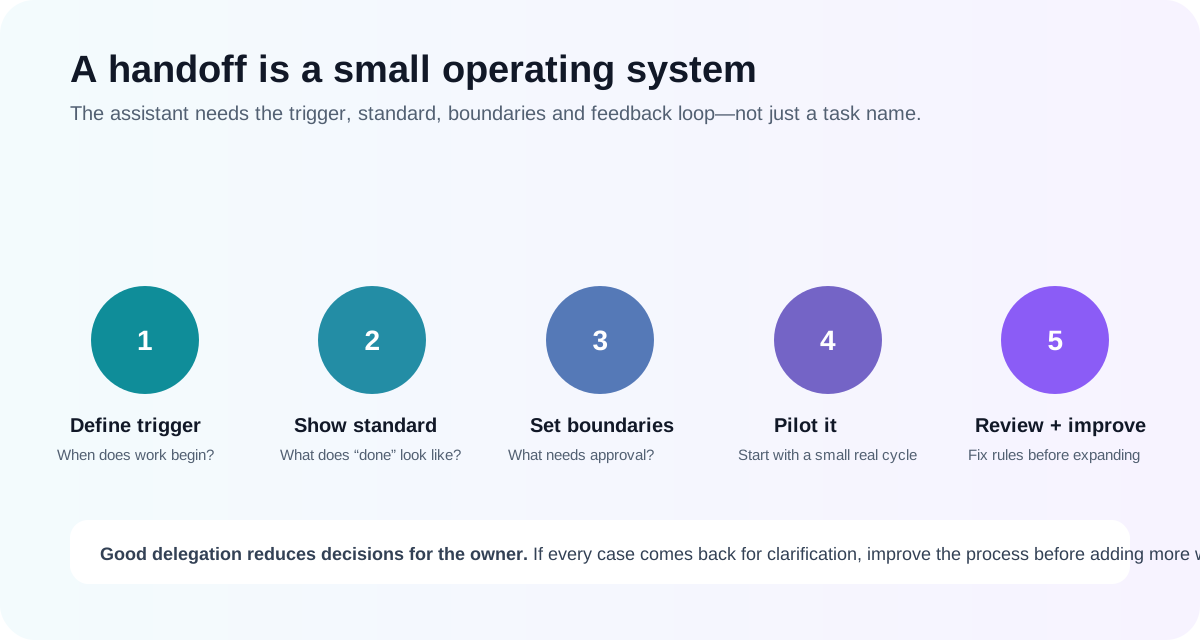
A useful handoff has five parts: the trigger, the finished result, the approved method or example, the decision boundaries and the review process. Without these, the assistant has to keep asking what to do next. With them, the workflow becomes easier to repeat and improve.
A simple first-week delegation plan
- Day 1: list recurring work and choose one task with a clear result.
- Day 2: document the trigger, steps, example output and escalation rules.
- Day 3: provide only the access needed for that workflow.
- Days 4–5: run the task on real work and review the result.
- End of week: correct the process before adding a second workflow.
The aim is not to transfer the maximum number of tasks. It is to create dependable capacity. Once one handoff runs cleanly, the same method can be used for the next recurring process.
Where managed virtual assistance fits
Some businesses need one narrow skill; others need recurring support across administration, marketing, data, WordPress and coordination. In either case, start by defining the work and the outcome before choosing the support model.
KatVerra provides managed virtual assistance for small businesses across practical digital operations. The service page explains the support areas and can help you compare your recurring workload with the type of assistance you actually need.
Make the first handoff boring—in a good way
The best first delegation is rarely the most impressive task in the business. It is the recurring process that becomes predictable enough to run without constant owner intervention. Choose one, define it clearly, review the first few cycles and expand only after the handoff is stable.